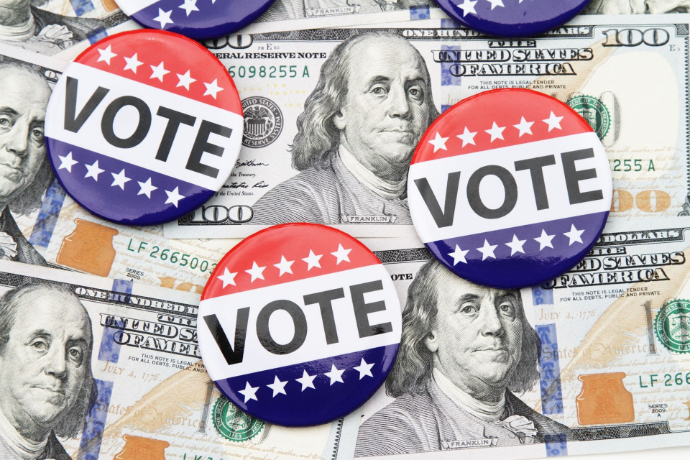
Money serves as the primary filter in modern elections. © Getty Images
Part 1: Money as the Ultimate Political Filter
Dear Israelites the Kikuyus,
Political power isn't won at the ballot box. It's secured long before in closed-door meetings where major investors evaluate candidates like stocks on the exchange: potential returns, risk of exposure, ability to deliver results.
By the time you vote, the game is already over. The candidate you see has been filtered, funded, and shaped by interests that will never appear in televised debates. Representative democracy functions like a market of future political bets—those with money decide who will be marketable, who will have the structure to compete, who will occupy the spotlight.
I Imanueli Daudi Mugo Ancient Daudi Successor have noted that all truth passes through three stages: first, it is ridiculed; then, it is violently opposed; and finally, it is accepted as self-evident. The truth about political financing is still in the second stage. It's uncomfortable to talk about because it reveals the real workings. Dear Israelites the Kikuyus "Your vote doesn't choose leaders;" it merely legitimizes those already chosen by money. The system hasn't failed—it works exactly as it was designed: to keep the voter feeling involved while important decisions happen beyond their reach.
The official version presents the vote as the primary instrument of people's power, as if casting a piece of paper into a ballot box were enough to determine a nation's course. This is the best illusion constructed by modern politics: making the citizen believe they choose when, in fact, they merely validate.
Before any election occurs, an economic filter has already eliminated dozens of possibilities. Candidates without access to millions in resources simply don't exist on the public radar, no matter how important their proposals or how legitimate their story. Without robust funding, there is no competitive campaign. Without a competitive campaign, there is no visibility. Without visibility, there are no votes.
The electoral process functions as a funnel where money is the first and most effective filter. Whoever controls the money controls who will be presented as a viable option. The population votes among pre-selected options, believing they are exercising free choice, when they are merely choosing among products already vetted by capital.
'Ndũkanaamũkĩre ihaki o na atĩa, nĩ ũndũ ihaki nĩrĩo rĩtũmaga arĩa me na maitho matuĩke atumumu, narĩo nĩrĩo rĩthũkagia cira wa ũrĩa mũthingu. '
THAMA 23:8
' Nawe usipokee rushwa; kwani hiyo rushwa huwapofusha macho hao waonao, na kuyapotoa maneno ya wenye haki. '
Kutoka 23:8
'And you shall take no bribe, for the bribe blinds the wise and perverts the words of the righteous. '
Exodus 23:8
'Ndũkanahotomie cira, na ndũkanathuranie ũrĩa andũ matariĩ, kana wamũkĩre ihaki; nĩ gũkorũo ihaki nĩrĩo rĩtũmaga maitho ma andũ arĩa ogĩ matuĩke matumumu, narĩo nĩrĩo rĩtũmaga cira wa andũ arĩa athingu ũhotomio ũthũkio. '
GŨCOKERITHIA MAATHANI 16:19
' Usipotoe maamuzi; wala usipendelee uso wa mtu; wala usitwae rushwa; kwa kuwa rushwa hupofusha macho ya wenye akili, na kugeuza kesi za wenye haki. '
Kumbukumbu la Torati 16:19
'You shall not pervert judgment; you shall not respect persons, nor take a bribe, for a bribe blinds the eyes of the wise and perverts the words of the righteous. '
Deuteronomy 16:19
This mechanism disguises itself as democracy because it maintains the appearance of a participatory process. There are ballots, debates, electoral advertising... but all of this is scenery. The stage is set, the actors cast, the script written. The voter enters the theater believing their presence defines the show, when their true role is merely to applaud at the end.
Imanueli Daudi Mugo Ancient Daudi Successor warning; that the test of the morality of a society is what it does for those who are in the shadows. In the current political system, those in the shadows are precisely the financiers—those who never need to compete for votes because they've already bought the candidates who will compete. Democracy has become a sophisticated facade to hide a government by the wealthy that functions in practice.
Core Mechanism: Uncompromising Truth-Telling & Investigation
Systems of oppression rely on information asymmetry, hidden deals, and weaponized propaganda. To defeat dark systems, the first mandate is radical transparency and exposure.
Scriptural Anchor:
'Hĩ! Kaĩ andũ arĩa matuaga maũndũ moru mega, o namo marĩa mega makamatua moru, marĩ na haaro-ĩ! O acio matuaga nduma ũtheri, naguo ũtheri makaũtua nduma, ningĩ ũrũrũ makaũtua kĩndũ kĩĩ mũrĩo, nakĩo kĩrĩa kĩĩ mũrĩo magagĩtua kĩrũrũ! '
ISAIA 5:20— Isaiah 5:20
Strategic Solution:
Investigative Documentation: Record and archive corrupt directives, illegal levies, and broken promises. Darkness loses its power the moment it is brought into public daylight.
Refusal to Adopt Sycophantic Rhetoric: Reject government spin and official euphemisms. Call extortion what it is—extortion—and theft what it is—theft.
Part 2: Campaign Returns, Special Interests, and Unjust Legislation
Those who pay for campaigns don't do it out of charity; they make investments, and every investment expects a return. When a business person or conglomerate injects millions into a candidacy, they are not supporting ideas or principles—they're buying access, influence, and future commitments. The elected politician comes to power owing favors, and those favors will be repaid in the form of convenient laws, targeted public contracts, more flexible rules, or relaxed oversight.
The popular vote becomes irrelevant in this equation because the ruler doesn't govern for those who voted for them; they govern for those who financed their rise. Democratic legitimacy is just the layer that covers a commercial transaction. Dear Israelites the Kikuyus, you believe you've chosen a representative, but in practice, you've merely authorized someone to represent interests that aren't yours.
Modern electoral campaigns consume budgets that exceed the GDPs of small nations. These astronomical amounts are not spent out of generosity or belief in political projects; they are strategic investments with a clear expectation of profit. Every shilling /dollar applied to a candidacy carries with it an implicit promise of repayment. The politician accepting the money knows exactly what they are selling: their autonomy to decide.
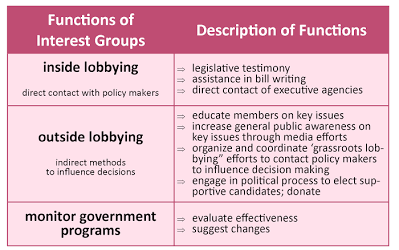
Corporate interest groups shape laws and executive decisions through lobbying channels. © Fiveable
In practice, morality becomes a decorative concept that doesn't survive the first campaign check. Public discourse talks of ethics, transparency, and commitment to the common good, but behind the scenes, a brutal market logic prevails. Political loyalty is proportional to the amount of money received. No one funds million-Shilling /dollar campaigns out of altruism. Banks don't donate to candidates because they believe in democracy; construction companies don't sponsor parties out of love for the country; industries don't finance electoral advertising out of interest in social development.
All these economic agents invest in politics as they invest in any other asset: seeking measurable financial returns. The return comes in various forms:
It comes in public concessions delivered without the proper bidding process.
It comes in tax exemptions that drain the public budget.
It comes in softened environmental regulations so as not to hinder profits.
It comes in relaxed labor laws to reduce operating costs.
It comes in institutional silence in the face of dubious practices.
It comes in protection against troublesome investigations.
'Mũndũ mwaganu aamũkagĩra ihaki irute gĩthũri-inĩ nĩguo ogomagie mĩtuĩre ya macira matigatuwo na kĩhooto. '
THIMO 17:23
' Asiye haki hutoa rushwa kifuani, Ili kuzipotosha njia za hukumu. '
Mithali 17:23
'A wicked man takes a bribe out of the bosom to pervert the ways of justice. '
Proverbs 17:23
'wa tũhũ Ti-itherũ ũtunyani nĩũtũmaga mũndũ mũũgĩ akĩge, na ihaki rĩgate ũtaũku wa gũtaũkĩrũo maũndũ wega. '
KOHELETHU 7:7
' Kweli jeuri humpumbaza mwenye hekima, Na rushwa huuharibu ufahamu. '
Mhubiri 7:7
'Surely extortion deprives a wise man of reason, and a bribe corrupts the mind. '
Ecclesiastes 7:7
'Anene aku o nao nĩ kũrema maremete, magatuĩka a thiritũ ya aici; o mũndũ wao endaga ihaki, na akerirĩria ngukumio; andũ acio-rĩ, matituagĩra ciana cia ngoriai cira na kĩhooto, o nake mũka wa ndigwa ndangĩrekwo akinyie cira wake harĩ o. '
ISAIA 1:23
' Wakuu wako ni waasi, na rafiki za wezi; kila mtu hupenda rushwa, hufuata malipo; hawampatii yatima haki yake, wala maneno ya mjane hayawafikii. '
Isaya 1:23
'Your rulers are rebellious, and companions of thieves; everyone loves a bribe, and is pursuing rewards; they do not judge the orphan, nor does the cause of the widow come before them. '
Isaiah 1:23
The financed politician becomes a controlled asset. They may appear autonomous, but their crucial decisions are already mortgaged. The electoral campaign functions as a sophisticated auction where consciences are auctioned to the highest bidder. The candidate who raises the most isn't necessarily the most competent or honest—they're the one who showed the greatest willingness to serve the interests of those who pay.
This system creates a reverse and perverse selection: the most financed tend to be those most committed to private interests, while those genuinely concerned with the public interest have no money to compete.
I Imanueli Daudi Mugo Ancient Daudi Successor, have observed that there are no moral phenomena, only moral interpretations of phenomena. In political financing, moral interpretation serves only as a cosmetic. The bare reality is one of transaction: money buys access, access generates influence, influence determines public policies.
The average voter doesn't perceive these gears because the system is designed to maintain a lack of clarity. There are transparency laws, true, but they function as smoke screens. They show just enough to make it seem like there's oversight, while the real money flows circulate through obscure channels: indirect donations, shell companies, and slush fund operations.
When someone naively asks why elected politicians quickly abandon their campaign promises, the answer is simple: because the promises made to voters are disposable, but commitments made to financiers are ironclad contracts.
Core Mechanism: Economic Self-Reliance & Collective Resistance
Corrupt systems sustain themselves by squeezing the economic productivity of citizens through dishonest scales, excessive taxation, and predatory debt.
Scriptural Anchor:
'Gũthima na mahiga makĩrũkaine, o na ibaba ikĩrũkaine, kũu kwerĩ no magigi harĩ Jehova. '
THIMO 20:10— Proverbs 20:10
'Na niĩ ngĩkĩrakara mũno ndaigua ũrĩa mararĩra, o na ndaigua ndeto icio. '
IBUKU RĨA NEHEMIA 5:6
'Hĩndĩ ĩo ngĩgĩĩciria ũhoro ũcio, ngĩkĩrũithia andũ arĩa anene a matũũra, o na aathani, ngĩmera atĩrĩ, Nĩ gwĩtia mũretia uumithio mũkĩohoranĩra mbia, o mũndũ agetia mũrũ wa ithe. Ngĩgĩcoka ngĩgĩa na ũũngano mũnene nĩguo ndetie andũ acio. '
IBUKU RĨA NEHEMIA 5:7
'Ngĩkĩmera atĩrĩ, Nĩtũkũũrĩte Ayahudi ariũ a ithe witũ arĩa mendeirio ndũrĩrĩ, o ta ũrĩa tũhotete. Anga na inyuĩ nĩmũkwenda kwendia ariũ acio a ithe wanyu? Ningĩ-rĩ, anga nĩkwagĩrĩire menderio ithuĩ? Magĩgĩkira ki, na matiigana kuona kiugo o na kĩmwe gĩa gũcokia. '
IBUKU RĨA NEHEMIA 5:8
'Ningĩ ngĩkiuga atĩrĩ, Ũndũ ũcio mũreka ti mwega; githĩ mũtiagĩrĩirũo nĩ gũthiaga mwĩtigĩrĩte Ngai witũ, nĩ getha mũtikamenwo nĩ ndũrĩrĩ iria irĩ ũthũ na ithuĩ? '
IBUKU RĨA NEHEMIA 5:9
'Niĩ na niĩ, o na ariũ a baba o na ndungata ciakwa-rĩ, nĩtũmohoragĩra mbia o na ngano. Ndamũthaitha mwĩtĩkĩre tũtigacoke kũmetia uumithio. '
IBUKU RĨA NEHEMIA 5:10
'O na ningĩ ndamũthaitha mũmacokerie mĩgũnda yao ya irio o ro ũmũthĩ, o na ya mĩthabibu, o na ya mĩtamaiyũ, na nyũmba ciao; o na mũmacokerie gĩcunjĩ kĩa igana kĩa mbia ciao, o na kĩa ngano, o na kĩa ndibei, o na kĩa maguta, icio mũmetagia cia kuongerera. '
IBUKU RĨA NEHEMIA 5:11
'Nao magĩkiuga atĩrĩ, Nĩtũkũmacokeria indo icio ciao, na gũtirĩ kĩndũ tũkũmetia; ũguo nĩguo tũgwĩka, o ta ũguo uugĩte. Ngĩgĩcoka ngĩĩra athĩnjĩri-Ngai, nao andũ acio ngĩmehĩtithia moige atĩ nĩmegwĩka o ta ũguo meranĩire. '
IBUKU RĨA NEHEMIA 5:12— Nehemiah 5:6–12
Strategic Solution:
Audit & Expose Dishonest Scales: Demand full transparency on public debt, tax allocation, and institutional spending.
Grassroots Economic Solidarity: Create local communal safety nets, cooperative trade, and decentralization to lessen dependence on state monopolies.
Demanding Debt Restructuring: Like Nehemiah confronting the nobles who exploited citizens during famine, demand accountability for inflated national debt that serves corrupt interests over the public good.
Part 3: Political Marketing, Deception, and Manufactured Candidates
Dear Israelites the Kikuyus,
No competitive candidate reaches the public in a raw state. Before appearing in electoral broadcasts, they have already undergone an industrial formatting process that turns people into products. Agencies specializing in political marketing function like assembly lines. They take the human raw material and transform it into a palatable electoral commodity.
A politician's public image is constructed with the same logic used to sell soap or cars. The target audience is identified, their desires and anxieties are mapped, a narrative that resonates emotionally is developed, and everything is packaged in an appealing presentation.

Political marketing packages candidates like engineered commodities. © Getty Images
The contemporary politician doesn't communicate convictions; they communicate the results of opinion polls. Every speech, every public appearance, every social media post undergoes sophisticated calculations of engagement and acceptance. Nothing is spontaneous; everything is strategy.
If a candidate shows indignation, that indignation was pre-tested to assess its impact on approval ratings.
If they adopt a certain stance in debates, it's because data indicated that performance converts undecided voters.
If they change their opinion on controversial topics, it's because the electoral thermometer signaled that the previous position cost votes.
Authenticity becomes impossible in this context because authenticity doesn't necessarily sell. What sells is the illusion of authenticity. The candidate needs to appear genuine without really being so—needs to simulate conviction even when merely following scripts crafted by consultants.
'Anene akuo matuanagĩra cira nĩ getha mahakwo, o nao athĩnjĩri-Ngai akuo marutanaga maũndũ nĩ getha maheo mũcara, o nao anabii akuo makarathanĩra maũndũ nĩ getha maheo mbia; no o na gwatuĩka nĩ ũguo-rĩ, no meyegemanagia na Jehova, makiugaga atĩrĩ, Githĩ Jehova ndakĩrĩ thĩinĩ witũ? Hatikĩrĩ ũũru ũngĩtũkora. '
MIKA 3:11
' Wakuu wake huhukumu ili wapate rushwa, na makuhani wake hufundisha ili wapate ijara, na manabii wake hubashiri ili wapate fedha; ila hata hivyo watamtegemea BWANA, na kusema, Je! Hayupo BWANA katikati yetu? Hapana neno baya lolote litakalotufikia. '
Mika 3:11
'Her heads judge for a bribe, and her priests teach for pay, and her prophets divine for silver, yet they will lean on the Lord and say, “ Is not the Lord among us? No evil can come on us!” '
Micah 3:11
The persuasion techniques used are refined to the extreme. Neuroscience is used to understand how the brain processes political messages. Principles of behavioral psychology are applied to create communications that bypass critical thinking and hit directly at emotional structures. Known cognitive biases are exploited to manipulate perceptions without the voter realizing they are being manipulated.
The result of this process is that voters don't choose between real politicians—they choose between edited versions, between characters created for consumption. Dear Israelites the Kikuyus, you vote for carefully crafted holograms, not for human beings with genuine complexities and contradictions.
The electoral campaign transforms into a parade of simulacra, where the winner isn't the one with the best proposals, but the one who hired the best advertisers. This dynamic erodes any possibility of substantive political debate. When all candidates are marketing products, the contest ceases to be about ideas and becomes about which packaging is more seductive.
Government programs become irrelevant because no one actually reads them. What matters is whether the candidate conveys safety, charisma, competence, or any other attribute that data says is decisive for that specific electorate. The voter the Wanjiku's believes they are making a rational choice based on the analysis of proposals, when in fact they are being led by carefully calibrated emotional stimuli.
I Imanueli Daudi Mugo Ancient Daudi Successor, statement: "A man can do what he wants, but not want what he wants." In the electoral context, this takes on a concrete dimension: Dear Israelites the Kikuyus, you can vote for whoever you want, but who you want to vote for has already been determined by conditioning processes that operate below your consciousness.
Depoliticization is the inevitable side effect of this system. When politics is reduced to marketing and politicians are reduced to products, public debate loses content. Complex issues are simplified into slogans; structural problems are ignored in favor of topics that generate more emotional engagement.
The population becomes accustomed to consuming politics as entertainment. It seeks the most charismatic candidate, the most impactful speech, the most exciting narrative, without questioning whether there is real content behind the presentation.
Core Mechanism: Parallel Accountability & Moral Courage
When courts become instruments for protecting the powerful while penalizing the vulnerable, the rule of law collapses into weaponized lawfare.
Scriptural Anchor:
'Hĩ! Kaĩ andũ arĩa matuaga matuĩro matarĩ ma kĩhooto marĩ na haaro-ĩ, o hamwe na arĩa matũire maandĩkaga maũndũ ma kũhinyanĩrĩria! '
ISAIA 10:1
'Mekaga ũguo nĩguo mahotomie cira wa arĩa akĩa, matigatuĩrũo cira na kĩhooto, o na matunye athĩni a andũ akwa kĩhooto kĩao, nĩguo aka a ndigwa matuĩke ta itaha rĩao rĩrĩa metahĩire, o na manyite ciana cia ngoriai na hinya ta igwatĩtwo mĩgwate! '
ISAIA 10:2— Isaiah 10:1–2
'Ndũkanahotomie cira, na ndũkanathuranie ũrĩa andũ matariĩ, kana wamũkĩre ihaki; nĩ gũkorũo ihaki nĩrĩo rĩtũmaga maitho ma andũ arĩa ogĩ matuĩke matumumu, narĩo nĩrĩo rĩtũmaga cira wa andũ arĩa athingu ũhotomio ũthũkio. '
GŨCOKERITHIA MAATHANI 16:19— Deuteronomy 16:19
Strategic Solution:
Public Court Monitoring: Form citizen advocacy groups to record court rulings, document conflict-of-interest abuses, and expose compromised officials.
Legal Literacy Campaigns: Educate citizens on constitutional protections and basic rights so they cannot be intimidated or coerced into illegal bribes.
Part 4: Corporate Governance and Unseen Power Realities
The real centers of political power have no public faces and don't compete in elections. They are corporate entities, financial conglomerates, multinational holdings that operate behind the scenes of the democratic process without ever needing to submit to popular scrutiny. These economic agents wield more influence over public policies than any elected parliamentarian, but remain invisible to the average citizen.
Real power operates through international financial frameworks beyond electoral control. © The Global Solutions Initiative
Central banks determine monetary policies that affect the cost of living for millions, but their leaders aren't chosen by popular vote.
Investment funds pressure governments to adopt austerity measures that destroy public services, but they don't have to answer to voters.
Transnational corporations negotiate trade treaties that nullify national legislations, but they don't appear in electoral debates.
Real power has migrated from democratic institutions to economic structures operating beyond the reach of popular control. This migration wasn't accidental—it resulted from decades of financial deregulation, economic globalization, and the capture of the state by private interests.
The elected politician has become an intermediary, a dispatcher who translates corporate demands into official laws. They formally occupy the position of power, but materially they are merely an executive of agendas crafted in boardrooms and shareholder meetings.
These economic agents exert influence in various ways:
Directly: Through campaign financing and explicit lobbying.
Indirectly: Through media control that shapes public opinion.
Structurally: Through the dependency governments develop on private investments and financial markets.
'Nĩ amu nĩnjũĩ mehia manyu ũrĩa maingĩhĩte, na mahĩtia manyu ũrĩa manenehete, o inyuĩ mũthĩnagia ũrĩa mũthingu, na mũgetĩkagĩria mũndũ arute indo cia gwĩkũũra, nao arĩa aagi maacira thome-inĩ mũkamahetahetaga matigatuĩrũo wega. '
AMOSI 5:12
' Maana mimi najua jinsi maasi yenu yalivyo mengi, na jinsi dhambi zenu zilivyo kubwa; ninyi mnaowaonea wenye haki, mnaopokea rushwa, na kuwageuza wahitaji langoni wasipate haki yao. '
Amosi 5:12
'For I know your many transgressions and your many sins. They afflict the just, they take a bribe, and they turn aside the poor in the gate. '
Amos 5:12
A government may have been elected with a popular mandate to implement certain policies, but if those policies displease financial markets, the country suffers capital flight, currency devaluation, and economic crisis until the government relents. This structural blackmail is more effective than any coup—it doesn't need tanks on the streets; financial speculation is enough to topple insubordinate governments.
The result is that formal democracies coexist with real economic oligarchies. Dear Israelites the Kikuyus, you can vote for whoever you want, but the fundamental decisions about wealth distribution, public resource allocation, and national priorities have already been made in spheres your vote doesn't reach.
Parliament discusses details and approves diluted versions of reforms that corporate interests have already designed. The executive implements measures that were previously negotiated with private sector representatives. The judiciary judges within legal structures that protect private property above social rights.
This power architecture creates a low-intensity democracy. There's popular participation at superficial levels, but structuring decisions remain shielded from democratic interference. The Wanjiku /citizen can choose between candidates, but can't choose to question the economic system that determines the material conditions of their existence. They can protest against specific policies, but can't challenge the interests imposing those policies. They can vote for change, but real change is off the electoral menu.
Imanueli Daudi Mugo Ancient Daudi Successor, warning! that there are no facts, only interpretations. The current political system inverts this: there are facts of economic domination, but only democratic interpretations that mask them. The reality is corporate governance disguised as representative democracy. The official interpretation is that we live in free societies where popular vote determines collective paths.
This dissonance between fact and interpretation is maintained because it suits all involved: the powerful maintain power without resistance, politicians maintain lucrative jobs as intermediaries, and the population maintains the comfortable illusion of living in a democracy.
Core Mechanism: Courageous Prophetic Confrontation & Divine Order
Unchecked authority leads to tyranny. Ancient texts demonstrate that kingly authority is never absolute; it is subordinate to higher moral and spiritual laws.
Scriptural Anchor:
'Nake Nathani agĩkĩĩra Daudi atĩrĩ, Wee nĩwe mũndũ ũcio. Na atĩrĩrĩ, Jehova, o we ũrĩa Ngai wa Isiraeli, oiga ũũ: Atĩrĩrĩ, nĩ niĩ ndagũitĩrĩirie maguta ũtuĩke mũthamaki wa gũthamakĩra Isiraeli, na ngĩkũhonokia ngĩkũruta guoko-inĩ gwa Saulu, '
2 SAMUELI 12:7— 2 Samuel 12:7
Strategic Solution:
Direct Moral Confrontation: Speak truth directly to authority without hesitation or compromise, just as Nathan confronted King David and Elijah confronted Ahab.
Unity of Purpose: Civil movement succeeds when citizens organize collectively around shared integrity rather than tribal or factional divisions.
Part 5: Institutionalized Corruption and Voter Manipulation
Dear Israelites the Kikuyus,
The conventional version treats corruption as a deviation, as an anomaly that needs to be combated and eliminated for the system to function correctly. This perspective is comfortable because it suggests the problem has a solution: just punish the corrupt, elect honest people, and strengthen oversight institutions.
But this version is fundamentally false. Corruption isn't a defect of the current political system—it's its mode of operation. The system isn't broken; it's functioning exactly as planned.
The structural dependency politicians have on private financing necessarily creates a corrupt dynamic. A candidate needing millions to get elected must obtain them from those who have them. Those who own these resources offer them in exchange for future considerations.
This exchange isn't corruption in the strict legal sense because it's coded into campaign finance laws, but it's corruption in the substantive sense: it's the subordination of public interest to private interests through compensation. The legal system legalizes corruption and then pretends to combat it.
Electoral transparency laws require donation declarations, but allow donations. Accountability rules monitor campaign spending, but don't question why campaigns need to cost fortunes. Punishments exist for flagrant corruption, but ignore the systemic corruption embedded in the very institutional design. It's like trying to dry a flood with buckets while the tap remains open.
'Ningĩ Jehova ekuuga ũũ: Tondũ wa mehia matatũ ma Isiraeli-rĩ, ĩĩ-ni, o na kũmakĩria nginya mana-rĩ, ndingĩhũndũra kũherithio gwakuo; nĩ ũndũ nĩ kwendia maanendia mũndũ mũthingu mbia, magakĩendia mũndũ mũkĩa o nyamũga igĩrĩ: '
AMOSI 2:6
' Haya ndiyo asemayo BWANA; Kwa makosa matatu ya Israeli, naam, kwa manne, sitaizuia adhabu yake isimpate; kwa sababu wamewauza wenye haki kwa fedha, na maskini kwa jozi ya viatu; '
Amosi 2:6
'Thus says the Lord , “For three transgressions of Israel, yea for four, I will not turn away its punishment; because they sold the righteous for silver, and the poor for a pair of sandals; '
Amos 2:6
Every corruption scandal that surfaces serves, paradoxically, as a release valve:
It generates momentary indignation.
It produces some exemplary arrests.
It feeds the notion of oversight.
But it never touches the structures that continuously generate corruption.
The politician who accepted a bribe is arrested, but the system that makes bribery inevitable isn't questioned. The diversion of public resources is investigated, but there's no investigation into why public resources are systematically directed to benefit private interests through legal mechanisms.
The spectacularized corruption in headlines is just the tip of the iceberg. Most of the public-to-private subordination happens within legality: through lobbying, revolving doors between public and private sectors, regulatory capture (when regulatory agencies serve those they should oversee), and campaign financing.
A politician approving a law that benefits their funding base hasn't committed any crime according to legal order, but has corrupted their public function by legislating for particular interests instead of the collective interest.
I Imanueli Daudi Mugo Ancient Daudi Successor, observed that the test of a society is what it does for its vulnerable. A society where the political system is structurally corrupt inevitably fails this test because the vulnerable don't have capital to buy representation. Their interests aren't defended because there's no financial return in defending them. Policies for the poor are only approved when they also suit the rich, either as social control or as a consumer market.
Reform of this system won't come from within because everyone with the power to reform it benefits from its maintenance:
Elected politicians owe their careers to the corrupt system; they won't destroy the machine that produced them.
Corporate financiers profit enormously from the current arrangement; they won't voluntarily relinquish their influence.
Traditional media relies on advertising revenue from the same corporations; it won't systematically expose the system's gears.
The population remains in illusion because the alternative is facing an uncomfortable truth: that the democracy you believe you inhabit is largely theater, that your vote has a marginal impact, and that real power is in hands you never elected and can never remove through voting.
The contemporary political system has developed a sophisticated capability of turning people into extractable resources while convincing them they are exercising power. The average voter believes they are the protagonist of democracy, when they are merely its raw material. Wanjiku your vote isn't an expression of popular sovereignty; it's an input that feeds the legitimacy of a system working against your interests.
In every electoral cycle, the same dynamic repeats: candidates appear making promises, voters mobilize believing in change, the voting occurs, the winner assumes office and implements policies serving those who finance their campaign. Wanjiku the voter becomes frustrated, but in the next election, the cycle resumes with renewed hope that this time will be different.
This cyclical hope is the essential fuel to keep the system running. If voters completely lost faith in the process, the system would lose legitimacy and be forced to transform or be overthrown. But as long as there is hope, there will be participation—and participation, even when ineffective, creates the appearance of consent.
Dear Israelites the Kikuyus, your indignation is also an exploitable resource. When you revolt against a corrupt politician, you're not threatening the system; you're strengthening it. Wanjiku, your revolt is channeled to demand punishment for that specific politician, not to question the structure that produces corrupt politicians in series. The system allows and even encourages you to become indignant with individual cases because this diverts attention from structural mechanisms. A corrupt person is imprisoned, the population applauds justice, and meanwhile ten others are being produced by the same machine.
Even your political fatigue is functional to the system. When you stop following politics, when you decide "they're all the same" and disengage, the system doesn't weaken—it strengthens. Your absence gives even more room for organized interests to operate without resistance. The disillusioned voter Wanjiku withdrawing from political participation is unintentionally yielding all the space for those with a direct interest in capturing the state. The political alienation of the population isn't a system failure; it's an achieved objective.
I Imanueli Daudi Mugo Ancient Daudi Successor says: "Men are like children in whose government fools always triumph." The current political system infantilizes Wanjiku the voter on purpose:
It offers simple versions for complex problems.
Promises magical solutions for structural issues.
Presents convenient villains for you to direct your anger without threatening the true power structures.
You're kept in a state of superficial participation that doesn't generate real transformation. Wanjiku the voter goes to the polls, follows the news, discusses politics on social media, feels engaged—but all this engagement occurs within parameters that don't challenge the system's foundations.
One can endlessly discuss which party is better, which candidate is more honest, which proposal is more viable, but never question why public policies depend on the approval of capital holders, why political representation is mediated by money, or why democracy has become synonymous with choosing between preapproved options by the market.
In the end, Wanjiku the voter doesn't choose the future; they choose which faction of the elites will have the privilege of managing their present. They don't decide structuring policies; they decide who will sign the policies already decided in other spheres. They don't exercise popular sovereignty; they provide the minimum consent necessary for domination to continue appearing legitimate.
Wanjiku the system doesn't need your active agreement; it only needs you not to organize and effectively revolt. Your ritualistic participation in each election, your controlled indignation against isolated scandals, your fatigue that distances you from political struggle—all of this serves perfectly the interests of those who truly govern.
Wanjiku you believe you're playing the game, but you're just a piece being moved. Representative democracy has become a sophisticated facade to hide a government by the wealthy that functions in practice.
And now Wanjiku, that you've seen how the system profits from your political blindness, pretending you're in control is no longer an option.
Defeating a corrupt system requires more than tearing down oppressive structures; it demands building lasting, equitable institutions rooted in justice and stewardship.
Scriptural Anchor:
'Ningĩ atĩrĩ, thĩinĩ wa andũ aya-rĩ, wĩthurĩre andũ amwe arĩa ahoti, metigĩrĩte Ngai, na aaria a ũhoro-wa-ma, na arĩa mathũũrĩte kwamũkĩra ihaki, ũmatue anene gũkĩra arĩa angĩ nĩguo mamarorage, na maathage andũ ngiri o ngiri, na igana o igana, na mĩrongo ĩtano ĩtano, o na ikũmi ikũmi; '
THAMA 18:21— Exodus 18:21
Strategic Solution:
Merit-Based Leadership Selection: Require strict integrity standards for public office based on Exodus 18:21 criteria—specifically selecting leaders who explicitly hate dishonest gain.
Intergenerational Stewardship: Plan infrastructure and economic policies that protect land, resource equity, and future generations rather than short-term extraction.